

In now day, the industrial equipment often requires reliable transmission across rotating interfaces. Whether it is electrical power, control signals, compressed air, or hydraulic fluid, choosing the correct rotating interface is critical for system stability and long-term performance.
Two parts are normally used to solve this challenge: slip rings and rotary unions. While they may look similar at first glance, their functions, internal designs, and application scenarios are very different. Choosing the wrong one can lead to signal failure, leakage, excessive maintenance, or even equipment downtime.
What Is a Slip Ring?
A slip ring is an electromechanical device that allows electrical power, control signals, or data to pass from a stationary part to a rotating part. Inside a slip ring, electrical transmission is achieved through sliding contact between brushes and conductive rings.
Slip rings are widely used in equipment where continuous rotation is required without twisting cables. Common examples include rotary tables, wind turbines, automation machinery, medical imaging systems, and packaging equipment.
Modern slip rings can transmit not only power but also complex signals such as Ethernet, encoder feedback, or fieldbus protocols.
What Is a Rotary Union?
A rotary union, also known as a rotary joint, is designed to transfer fluids—such as hydraulic oil, water, air, steam, or coolant—between stationary and rotating components. Unlike slip rings, rotary unions do not transmit electrical signals. Their main focus is sealing and pressure control.
Inside a rotary union, precision seals and bearings allow fluid to pass through rotating interfaces without leakage. Rotary unions are commonly used in CNC machines, hydraulic systems, injection molding machines, printing equipment, and automated production lines.
Depending on the medium, rotary unions can be hydraulic or pneumatic.

Slip Ring vs. Rotary Union: Core Functional Differences
The most important difference between a slip ring and a rotary union lies in what they transmit.
Slip rings are used for electrical transmission—power, signals, and data. Rotary unions are used for fluid transmission—liquids or gases. Structurally, this leads to very different internal designs.
Slip rings focus on contact materials, electrical noise control, and signal stability. Rotary unions focus on sealing performance, pressure resistance, and leakage prevention. Because of these differences, one device cannot replace the other.
In many modern systems, both electrical and fluid transmission are required. In such cases, engineers may choose separate components or an integrated solution that combines both functions.
When Should we choose a Slip Ring?
A slip ring is the right choice when your system needs to transmit electrical power or signals through continuous rotation. Typical scenarios include motor-driven equipment, sensor feedback systems, and communication interfaces.
If your application involves encoders, Ethernet communication, or mixed power and signal transmission, a slip ring designed for low electrical noise and stable contact resistance is essential. In some cases, a hybrid slip ring is used to handle power, signals, and data within a single compact unit.
Slip rings are also selected based on installation method. For systems with a central shaft, through-bore designs allow cables or pipes to pass through the center, offering greater mechanical flexibility.
When Is a Rotary Union the Better Choice?
A rotary union is required whenever fluids must pass through a rotating interface. This includes hydraulic oil for actuators, compressed air for pneumatic tools, or coolant for temperature control.
Rotary unions are selected based on pressure, speed, temperature, and the type of medium. For example, hydraulic systems demand robust sealing materials and precise machining to prevent leakage under high pressure.
In many machines, fluid transmission is just as critical as electrical transmission. Using the wrong rotary union—or attempting to replace it with an electrical component—can result in leaks, contamination, and safety risks.
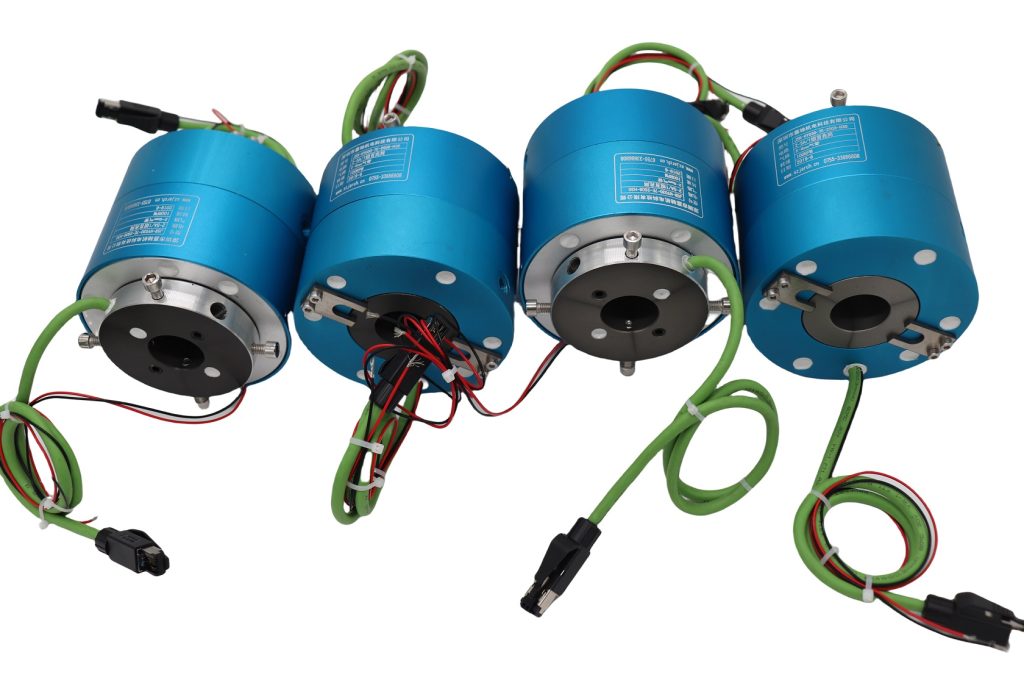
Integrated Solutions: Combining Slip Rings and Rotary Unions
As equipment becomes more compact and multifunctional, engineers increasingly choose integrated solutions that combine slip rings and rotary unions into a single assembly.
An integrated unit allows electrical power, signals, and fluids to pass through one rotating interface. This reduces installation space, simplifies alignment, and lowers the risk of failure caused by misalignment between separate components.
Integrated designs are often customized to match specific voltage, current, pressure, and speed requirements.
Main Selection reasons we should know
When choosing between a slip ring and a rotary union, many issues arise not from design errors but from incorrect assumptions.
One common mistake is selecting based only on nominal ratings. Laboratory values do not always reflect real operating conditions. Vibration, contamination, temperature changes, and duty cycles must be considered.
Another overlooked factor is future expansion. Choosing a solution with no margin for additional signals or higher pressure may limit system upgrades later.
Slip Ring, Rotary Union, or Both?
The decision is not always “either-or.” Many modern machines require both electrical and fluid transmission. In such cases, engineers must decide whether to use separate components or an integrated solution.
Separate components offer flexibility and easier replacement, while integrated solutions reduce space and improve system reliability. The best choice depends on system complexity, operating conditions, and long-term maintenance strategy.
If you are unsure, working with a manufacturer that offers custom slip ring and rotary union solutions can help ensure the final design matches real-world conditions rather than theoretical assumptions.
| Feature | Slip Ring | Rotary Union |
|---|---|---|
| Primary Function | Transmits electrical power, signals, or data | Transmits fluid or gas under rotation |
| Transmission Medium | Electricity, analog signals, digital signals, Ethernet | Hydraulic oil, water, air, coolant, steam |
| Typical Applications | Motors, sensors, encoders, cameras, control systems | CNC machines, automation equipment, hydraulic systems |
| Contact Type | Sliding electrical contact (brush & ring) | Sealed mechanical interface |
| Pressure Handling | Not designed for fluid pressure | Designed for low to high pressure media |
| Data Transmission | Supports high-speed data (Ethernet, fieldbus) | Not applicable |
| Maintenance Focus | Brush wear and contact stability | Seal wear and leakage prevention |
| Operating Environment | Electrical noise and signal integrity sensitive | Contamination, pressure, and temperature sensitive |
| Installation Location | Mounted on rotating shafts or housings | Mounted inline with fluid or air systems |
| Customization Options | Circuit count, current, signal type | Media type, pressure rating, port size |
Choosing between a slip ring and a rotary union is not just a technical decision—it directly affects system reliability, maintenance cost, and long-term performance. Understanding what each component is designed to do helps avoid costly mistakes.
By clearly defining what needs to be transmitted, understanding real operating conditions, and allowing sufficient design margin, engineers and purchasing teams can select the right rotating interface with confidence.
If your system requires both electrical and fluid transmission, exploring integrated solutions early in the design phase can save time, space, and long-term operational costs.

Frequently Asked Questions: Slip Ring vs. Rotary Union
What is the main difference between a slip ring and a rotary union?
The main difference is the type of media they transmit. A slip ring transfers electrical power, signals, or data through a rotating interface, while a rotary union transfers fluid or gas such as hydraulic oil, water, air, or steam.
When should I use a slip ring instead of a rotary union?
You should use a slip ring when your application requires continuous transmission of electrical power or signals between stationary and rotating parts. Typical examples include motors, sensors, encoders, control systems, and data communication equipment.
When is a rotary union the better choice?
A rotary union is the right choice when your system needs to transfer fluids or gases under rotation. This includes hydraulic oil, compressed air, coolant, or steam, commonly used in CNC machines, automation equipment, and fluid control systems.
Can slip rings and rotary unions be used together?
Yes. In many industrial applications, slip rings and rotary unions are combined into an integrated solution. This allows both electrical signals and fluid or air to be transmitted simultaneously, saving installation space and improving overall system reliability.
How do I choose between a slip ring and a rotary union for my application?
The selection depends on what you need to transmit. Choose a slip ring for electricity or data, a rotary union for fluid or gas, or a combined solution if your system requires both. Factors such as operating speed, pressure, temperature, and environment should also be considered.
Are hybrid slip ring and rotary union solutions customizable?
Yes. Hybrid solutions combining slip rings with hydraulic or pneumatic rotary unions can be customized based on circuit count, media type, pressure rating, rotational speed, and installation requirements to meet specific industrial applications.